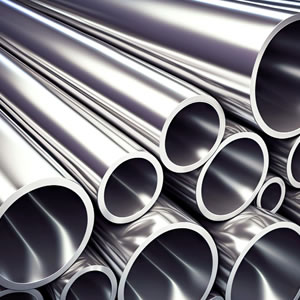
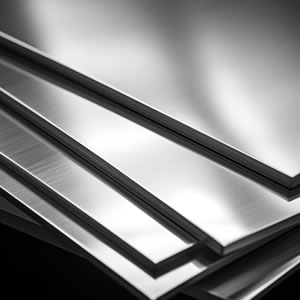
Nickel-based alloys possess excellent thermal stability and dimensional control characteristics, making them suitable for industrial applications requiring high temperature or high precision.
Application Industries:
Communications, solar energy, aerospace, machinery, template etching, and related industries.
1-1 Controlled Expansion Alloys
Controlled expansion alloys are widely used where the thermal expansion of metals must be considered in component design. Examples include hermetic seals with glass or ceramics and components that must meet specified expansion requirements over a defined temperature range.
These high-quality specialty alloys serve aerospace, aviation, communications, defense, electronics, energy, medical, nuclear, research, and other high-technology industries.
-
- Invar®
- A low expansion alloy consisting of nominal 36% nickel; balance iron. This controlled expansion alloy is known for its rate of thermal expansion that is approximately one-tenth of carbon steel at ambient temperatures up to 400°F.
Its very low coefficient of thermal expansion makes Invar® suitable for measuring instruments and electronic equipment.
-
- Super Invar® 32-5
- Super Invar® is manufactured to provide minimum thermal expansion at room temperatures. The thermal expansion rates exhibited by this alloy is less than half of Invar 36 with a narrower application temperature range due to a lower Curie temperature. The alloy exhibits austenite stability to service temperatures at least -67°F (-55°C). ASTM F1684 and UNS K93500 are the specification references.Although Super Invar has a substantially lower expansivity than Invar, it is susceptible to martensite transformation in the vicinity of -30°C. (-22°F), due to its reduced nickel content.Super Invar® 32-5 exhibits minimum thermal expansion at room temperature (one half of Invar® alloy). The thermal expansion properties are less than that of Invar alloy in the 67/203°F (-55/95°C) temperature range. The minimal expansion of this alloy over this range of temperatures makes this alloy useful in many applications including structural components and substrates in instrument systems requiring precision measurements. Also used in wave guide tubes and systems requiring metals in conjunction with low expansion glass/quartz assemblies.
Applications:
- Laser instruments and equipment
- Ring laser gyroscopes
- Metrology devices
- Optical instruments
- Positioning devices
- Structural components
- Telescopes
-
- Alloy 42
- A controlled expansion alloy consisting of 41% nominal nickel, balance iron. Used in a wide variety of electronic applications, lead frames, especially for glass and ceramic seals
Alloy 42 was an early material of choice for integrated circuits and remains useful in a wide range of applications because of its distinctive properties. It is used in structural components for measuring and control equipment, where expansion and contraction caused by temperature changes can affect component accuracy.
For hermetic packaging, Alloy 42 is typically nickel-plated and then gold-plated to prevent corrosion and improve reliability.
Applications:
- Enameled resistors without prior heat treatment
- Bubble-free glass-to-metal seals
- Integrated circuit lead frames
- Lids for hermetic packages
- Automotive lamps
- Industrial lamps
- Transformer bushings
- Capacitor bushings
- Electron tubes
- Terminals
-
- Alloy 46
- A controlled expansion alloy, Alloy 46 applications include glass-to-metal seals for a wide variety of electronics such as tubes, resistors, hermetic packages including automotive and industrial lamps.Alloy 46 is used in applications requiring glass or ceramic seals.
-

- Alloy 48
- Alloy 48 is a nickel-iron controlled expansion, The alloy is comprised of 48% nickel with the balance of iron. Industrial applications of the alloy are primarily found in electronics that require glass and or ceramic seals.Alloy 48 is used for glass-to-metal seals in electron tubes and hermetic devices. It is suitable for sealing to soft lead glass or soda-lime glass where a low coefficient of expansion at 400°C is required.
-
- Alloy 52
- A controlled expansion alloy consisting of 50.5% nominal nickel, balance iron; used in a wide variety of electronic applications especially for glass seals.Applications that require sealing to soft glasses, such as in lead wires for mercury switches and semiconductor devices, automotive and industrial lamps are examples of where Alloy 52 has been incorporated into the design. The alloy is also applicable for enameled resistor terminals.
Alloy 52 is suited for:
- Structural measurement and control applications
- Expansion and contraction due to temperature changes would negatively impact the accuracy of component.
- Hermetic packaging
- Alloy 52 is often nickel plated and then gold flashed to prevent corrosion and increase reliability.
-
- Kovar® ASTM F15
- Kovar®( ASTM F15) is the standard controlled-expansion material for glass-to-metal sealing and hermetic electronic packaging.
Medical device, aerospace, defense, electronics, semiconductor, and scientific instrument manufacturers specify Kovar® alloy when a reliable seal between metal and glass or ceramic is required.
Kovar’s expansion coefficient matches borosilicate glasses and alumina ceramics closely enough to form stress-free hermetic seals across the operating temperature window. The alloy is porosity-free, deep-drawable, and machinable with standard tooling adapted for slow-feed work on controlled-expansion alloys.
Applications:
- include integrated circuit flatpack and dual-in-line packages.
- Navigational equipment and medical electronic device packaging
- Power transmitter components
- X-ray tube components
- Microwave tube housings
- Vacuum tube envelopes
1-2 Electrical & Electronic Nickel
Nickel is one of three elements, beside iron and cobalt, that exhibit magnetic properties at ambient temperatures. Characteristically all nickel grades are strong, ductile, and corrosion-resistant over a wide temperature range.
-

- Nickel 200
- Nickel 200, 201, and 233 are commercially pure wrought nickels supplied for chemical processing, oil and gas, electrical and electronic, and industrial equipment applications.
-
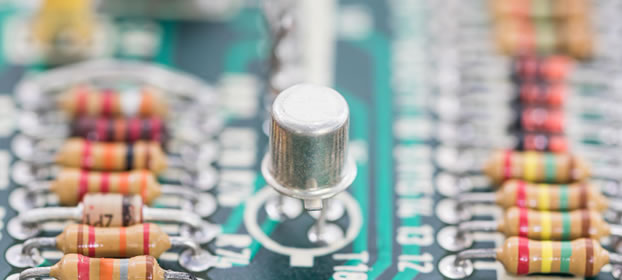
- Nickel 201
- is the low-carbon modification of Nickel 200. It has a low annealed hardness along with a low work-hardening rate.
Applications:
• Caustic soda concentration equipment
• Plate evaporators
• components that must operate above the temperature limit of Nickel 200.
• parts requiring substantial cold forming during fabrication.
-
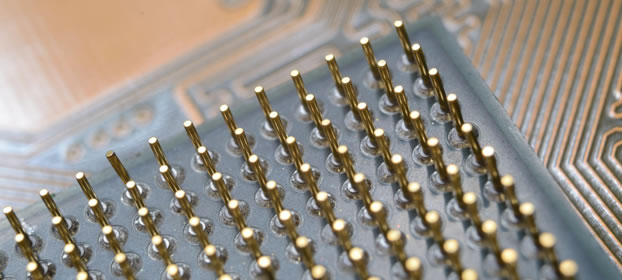
- Nickel 233
- Nickel 233 is also a commercially pure wrought nickel that exhibits excellent corrosion resistance. It contains lower residual elements of FE, Mn, Si, S, and Ti.
-
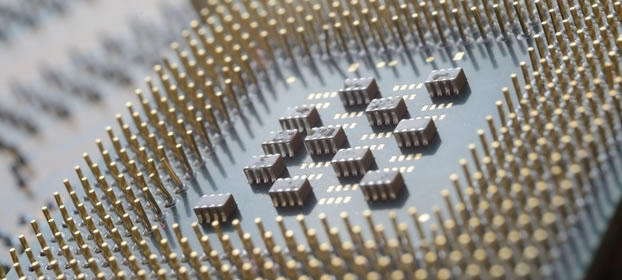
- Nickel 205
- Nickel 205 and Nickel 270 are the high-purity wrought nickels specified for electrical, electronic, magnetostrictive, battery, and precision laboratory applications.
Both grades sit one tier above Nickel 200, 201, and 233 in chemistry control, with composition limits under ASTM F3 designed for use in vacuum tubes, electron device structures, battery electrodes, and other parts where impurity content directly affects performance.
-
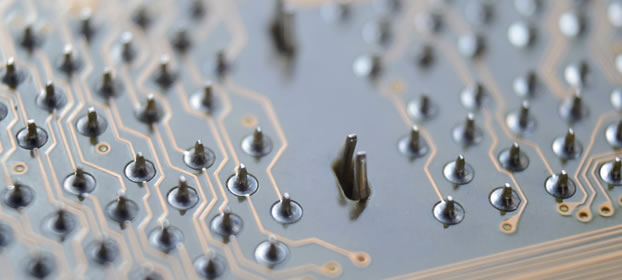
- Nickel 270
- the high-purity matrix is one of the reasons Nickel 270 is specified for clad substrates in the first place. Because residual elements are held to 0.001% maximum on most contaminants, there is essentially no risk of unwanted species diffusing into the clad layer during processing. Common precious-metal cladding combinations include silver, gold, palladium, and platinum on Nickel 270 substrates for electronic contacts and electrochemical applications.